Page: 1
/ 14
Total 61 questions
Cisco Designing and Implementing Secure Cloud Access for Users and Endpoints 300-740 SCAZT Exam Questions
Question 1
What does the MITRE ATT&CK framework catalog?
Answer : A
Question 2
Refer to the exhibit.
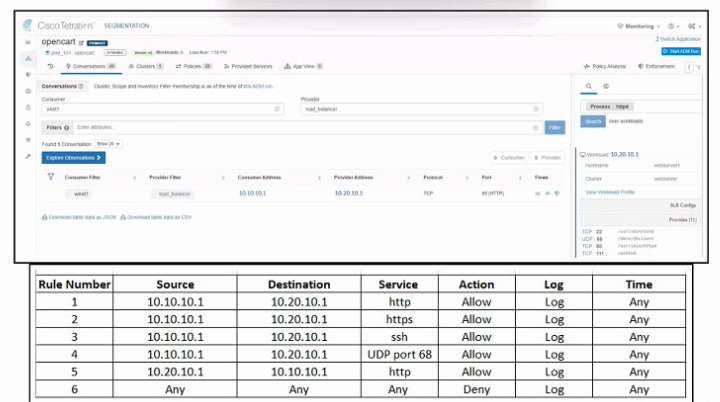
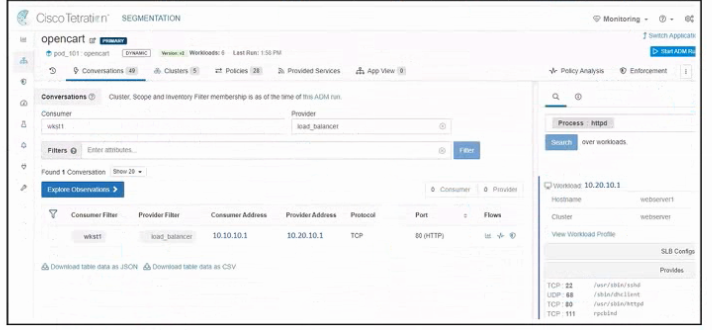
Refer to the exhibit. An engineer must create a firewall policy to allow web server communication only. The indicated firewall policy was applied; however, a recent audit requires that all firewall policies be optimized. Which set of rules must be deleted?
Answer : A
Question 3
Refer to the exhibit.
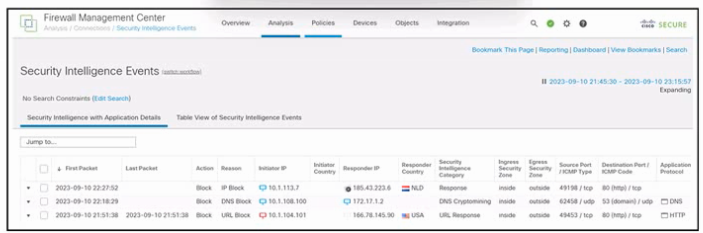
Refer to the exhibit. An engineer is analyzing a Cisco Secure Firewall Management Center report. Which activity does the output verify?
Answer : D
Question 4
According to the MITRE ATT&CK framework, which approach should be used to mitigate exploitation risks?
Answer : B
Question 5
Refer to the exhibit.
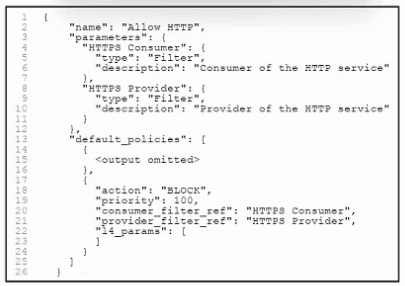
Refer to the exhibit. An engineer must create a segmentation policy in Cisco Secure Workload to block HTTP traffic. The indicated configuration was applied; however, HTTP traffic is still allowed. What should be done to meet the requirement?
Answer : B
Question 6
Refer to the exhibit.
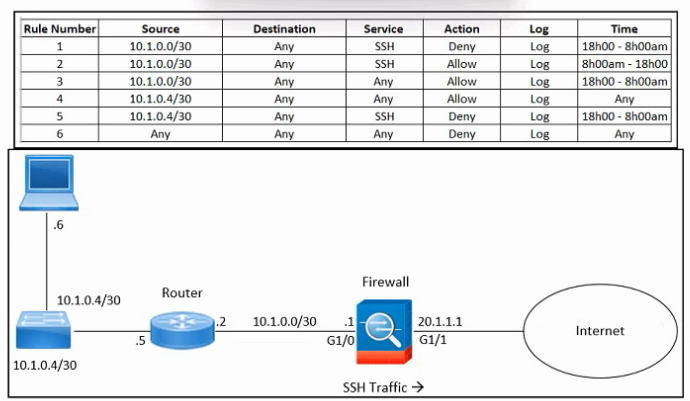
Refer to the exhibit. An engineer must troubleshoot an issue with excessive SSH traffic leaving the internal network between the hours of 18:00 and 08:00. The engineer applies a policy to the Cisco ASA firewall to block outbound SSH during the indicated hours; however, the issue persists. What should be done to meet the requirement?
Answer : B
Question 7
Refer to the exhibit.

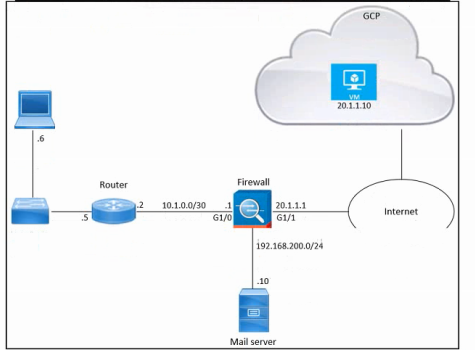
Refer to the exhibit. An engineer must provide HTTPS access from the Google Cloud Platform virtual machine to the on-premises mail server. All other connections from the virtual machine to the mail server must be blocked. The indicated rules were applied to the firewall; however, the virtual machine cannot access the mail server. Which two actions should be performed on the firewall to meet the requirement? (Choose two.)
Answer : A, D
 All Official Question Types