Page: 1
/ 14
Total 169 questions
HP Implementing Aruba Campus Switching Solutions HPE6-A45 Exam Questions
Question 1
Refer to the exhibit.
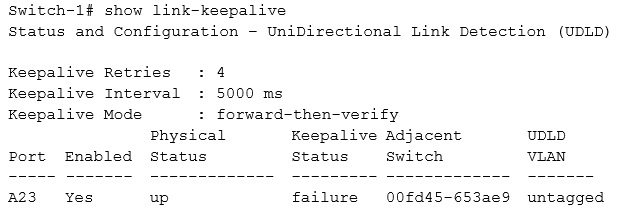
Switch-1 and Switch-2 connect on interface A23. The switches experience a connectivity issue. The network administrator sees that both switches show this interface as up. The administrator sees the output shown in the exhibit on Switch-1.
What is a typical issue that could cause this output?
Answer : A
Question 2
A network administrator needs to configure VRRP on VLAN 2 on two AOS-Switches. Which two settings must match on both switches?
Answer : D
Question 3
Refer to the exhibits.
Exhibit 1
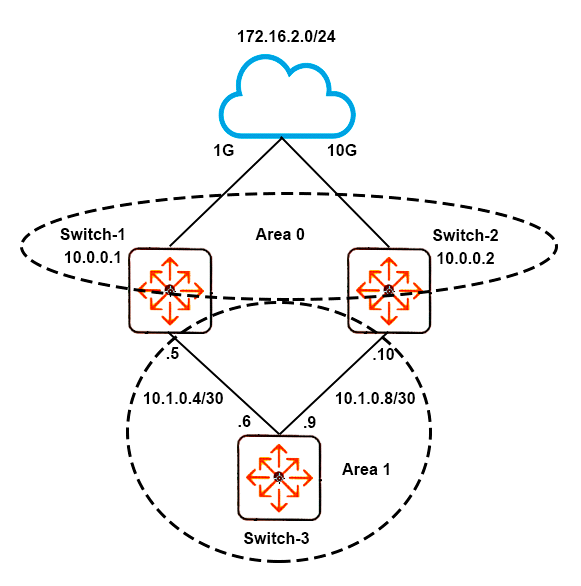
Exhibit 2
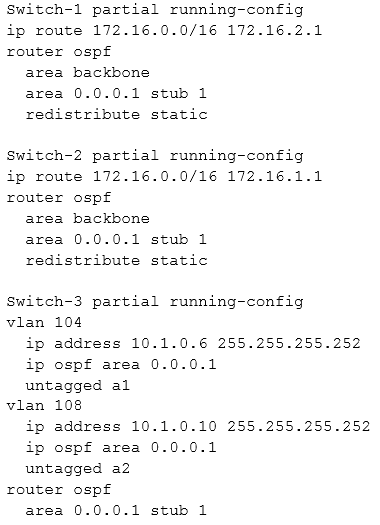
The exhibits show the current operational state for routes on Switch-3. The company wants Switch-3 to send all traffic to 172.16.0.0/16 through Switch-2.
Which single configuration change creates the desired behavior?
Answer : D
Question 4
Refer to the exhibit.
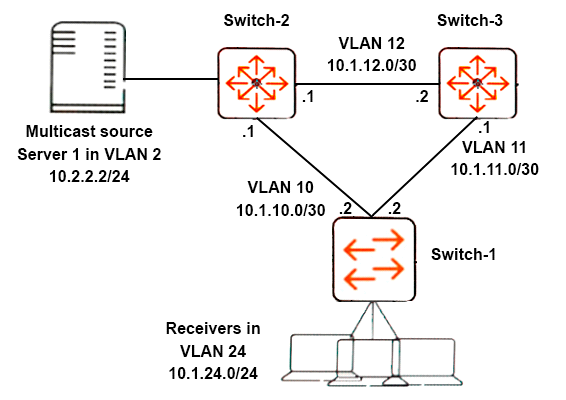
Network administrators set up PIM-DM to route multicast traffic from Server 1 to clients in VLAN 24. The multicasts are not active now, but the administrators want to determine which path the multicasts will take.
What should the administrators check to help them calculate this path?
Answer : C
Question 5
AOS-Switches authenticate guests to ClearPass with captive portal. When guests first connect their device to the network, they are redirected to a captive portal in which they log in. ClearPass then stores the guest MAC addresses, and the guests are permitted access. Due to a conflict, the network administrator needs to change the dynamic authorization port, port 3799, on Aruba ClearPass.
If the administrator forgets to also change the port on one of the AOS-Switches, what will be one symptom?
Answer : D
Question 6
Refer to the exhibit.
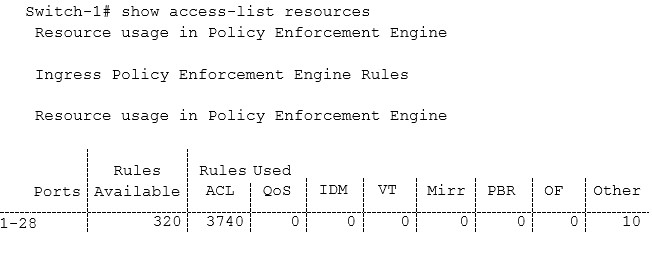
An AOS-Switch has an extended ACL that is applied to several physical interfaces.
- New interfaces have been brought online.
- The ACL has been applied to them as well.
A network administrator sees the output in the exhibit and is concerned that the switch will reach the limit for rules.
What can the administrator do to address this concern?
Answer : A
Question 7
A network administrator can set the OSPF metric-type on an AOS-Switch to Type 1 or Type 2. What is the difference?
Answer : D
 All Official Question Types