Page: 1
/ 14
Total 90 questions
Juniper Enterprise Routing and Switching, Professional Exam JN0-648 JNCIP-ENT Exam Questions
Question 1
Exhibit.
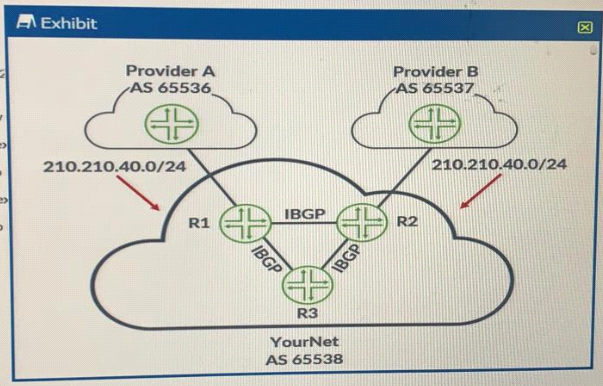
YourNet is learning the 210.210.40.0/24 route from Provider A and Provider B YourNet would like to forward traffic destined to the 210.210.40.0/24 networking using Provider B.
Referring to the exhibit, how would you accomplish this task?
Answer : D
Question 2
Click the Exhibit button.
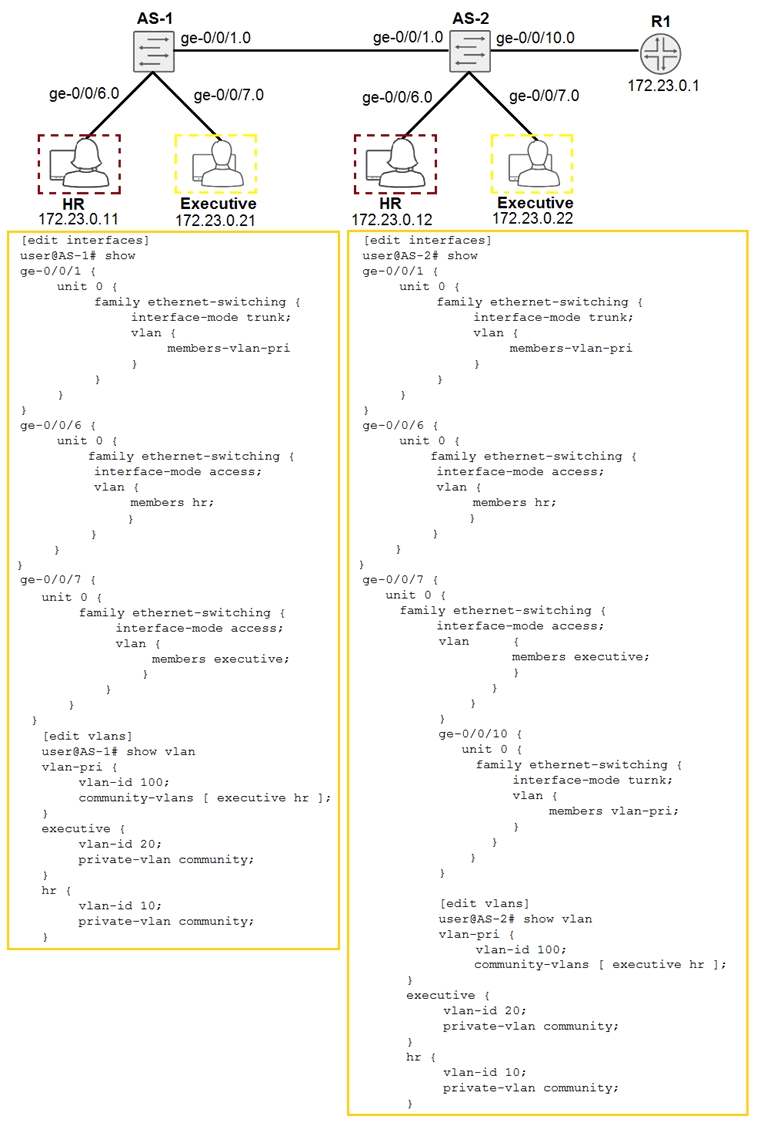
You recently implemented the configuration shown in the exhibit. After committing these changes, the community devices connected to AS-1 are not able to communicate with the appropriate community devices connected to AS-2.
What must be done to allow these community devices to communicate?
Answer : C
https://www.juniper.net/documentation/en_US/junos/topics/topic-map/private-vlans.html#id-example-configuring-pvlans-with-secondary-vlan-trunk-ports-and-promiscuous-access-ports
On all the switches, configure a trunk interface as the Inter-Switch Link (ISL) that will be used to connect the switches to each other
Question 3
Exhibit.
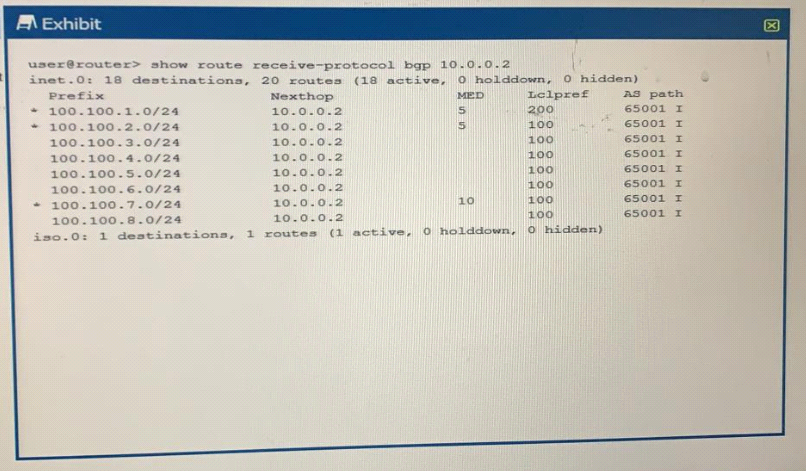
Referring to the configuration shown in the exhibit, how many of the routes received from 10.0.0.2 will be active in the routing table?
Answer : C
Question 4
which protocol is a multicast routing protocol?
Answer : C
Question 5
You are implementing 802.1x access control in your network of EX Series switches. You have some older client devices connecting to your network which do not support 802.1x.
Which statement is true regarding the older devices?
Answer : C
Question 6
Exhibit.
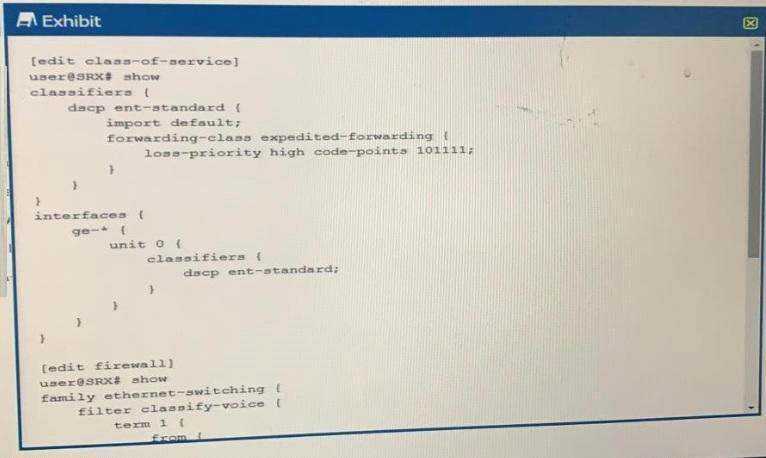
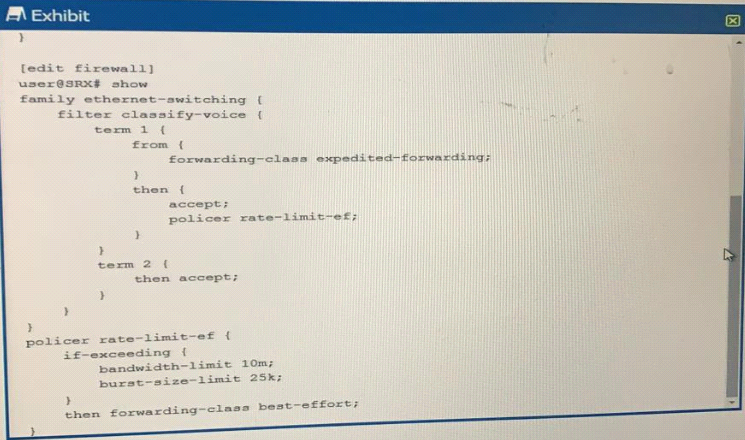
You are implementing CoS for a custom application that is labeling its packets with DSCP code-point 101111. You have applied the configuration shown in the exhibit, but not that while some custom application traffic ingressin on ge-0/0/1 transits the SRX Series device successfully, packets ingressing all other ge-* interfaces are being dropped.
Which action should you take to solve this problem?
Answer : D
Question 7
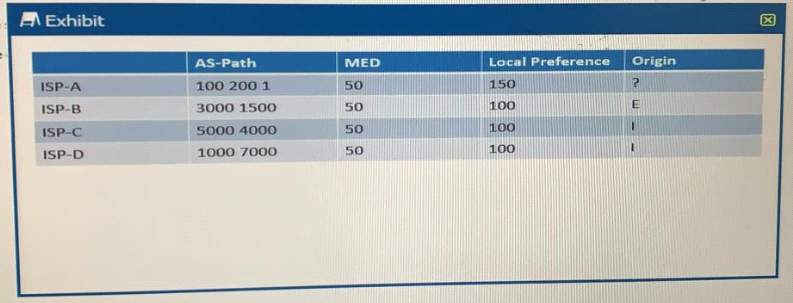
You receive the same 100.200.0/16 route from all four ISPs to which you are connected.
Referring to the exhibit, which ISP's route will be selected as active?
Answer : A
 All Official Question Types