Page: 1
/ 14
Total 96 questions
Microsoft Developing AI Apps and Agents on Azure AI-103 Exam Questions
Question 1
Note: This section contains one or more sets of questions with the same scenario and problem. Each question presents a unique solution to the problem. You must determine whether the solution meets the stated goals. More than one solution in the set might solve the problem. It is also possible that none of the solutions in the set solve the problem.
After you answer a question in this section, you will NOT be able to return. As a result, these questions do not appear on the Review Screen.
You have a Microsoft Foundry project that contains an agent. The agent generates summaries from retrieved policy documents.
Users report that some responses omit required regulatory clauses, even when the clauses are present in the retrieved content.
You need to improve response completeness.
Solution: You add a reflection pass that regenerates the response if the required clauses are missing.
Does this meet the goal?
Answer : A
Yes, the solution meets the goal. The problem is not retrieval availability, because the required regulatory clauses are already present in the retrieved policy documents. The failure occurs during generation: the agent produces a summary that omits required content. A reflection pass is the correct application-level control because it adds a verification step before the response is returned. The pass can compare the draft answer against the retrieved clauses, detect missing mandatory content, and trigger regeneration or revision until the summary includes the required clauses.
This aligns with Microsoft Foundry's evaluation and observability model, where generated responses are assessed for reliability, groundedness, relevance, and quality throughout the AI application lifecycle. Foundry observability guidance describes evaluation as a mechanism for measuring response quality and improving AI outputs across development and production workflows. The Azure AI evaluation SDK also defines completeness as the extent to which a generated response contains all necessary and relevant information with respect to the provided ground truth. Reflection operationalizes that quality check inside the application flow, rather than merely reporting the defect after the fact. Reference topics: model reflection, response completeness, RAG generation quality, retrieved context verification, and agent response optimization.
Question 2
You have a Microsoft Foundry project that generates product marketing images from text prompts.
After publishing several images, the legal team at your company identifies a competitor's logo on a sign in the background of an image.
You need to remove only the logo, while preserving the rest of the image.
What should you do?
Answer : C
The correct answer is C because the requirement is a localized image edit: remove only the competitor logo while preserving the rest of the already generated image. Azure OpenAI image editing is designed for modifying existing images based on a text instruction, rather than regenerating the entire image from scratch. Microsoft's Azure OpenAI image guidance states that the Image Edit API modifies existing images and requires an input image as part of the request. In a mask-based inpainting workflow, the mask identifies the exact region to change, allowing the model to replace only the logo area while retaining surrounding background, composition, lighting, and product content.
Increasing prompt guidance strength would affect adherence during generation, but it would not safely remove a specific logo from a completed image. Modifying the original prompt and regenerating may create a different image and does not guarantee preservation of the approved visual content. Rerunning with a different random seed also changes the image unpredictably and may introduce new brand or legal issues. Mask-based inpainting is the minimal-change remediation method for post-generation brand cleanup. Reference topics: Azure OpenAI image editing, inpainting, mask-guided edits, image generation governance, and computer vision solutions.
Question 3
You have a customer support agent that uses the Microsoft Foundry Agent Service.
Sometimes, customers return to a session days later to continue the same support case, and the agent must resume with the full historical context. The agent must provide the following:
* Multi-turn continuity within the session * Cross-session continuity for the same case * Access to the full interaction history, including user messages, agent messages, tool calls, and tool outputs
You need to ensure that the agent automatically reloads the complete history on each new turn.
What should you do?
Answer : C
The correct approach is to create and reuse a conversation by storing the conversation's ID and supplying that ID on subsequent requests. In Microsoft Foundry Agent Service, conversations are durable objects with unique identifiers that can be reused across sessions. The official runtime guidance states that conversations store items, including messages, tool calls, tool outputs, and other data, and are intended for multi-turn continuity, cross-session continuity, and inspection of what happened over time. This directly satisfies the requirement to resume the same support case days later with the full historical context.
Persisting only the final model response is insufficient because it loses the full interaction chain, especially tool calls and tool outputs that may be essential to case state. Memory summarization is also not the best fit because the requirement asks for the complete history, not a compressed representation that may omit details. Reusing the conversation ID allows Foundry to maintain the conversation server-side so the next turn can reuse prior context without the client manually rebuilding prompts. Reference topics: Foundry Agent Service runtime components, conversations, conversation items, multi-turn continuity, cross-session continuity, and tool output history.
Question 4
Note: This section contains one or more sets of questions with the same scenario and problem. Each question presents a unique solution to the problem. You must determine whether the solution meets the stated goals. More than one solution in the set might solve the problem. It is also possible that none of the solutions in the set solve the problem.
After you answer a question in this section, you will NOT be able to return. As a result, these questions do not appear on the Review Screen.
You have a Microsoft Foundry project that contains an agent. The agent generates summaries from retrieved policy documents.
Users report that some responses omit required regulatory clauses, even when the clauses are present in the retrieved content.
You need to improve response completeness.
Solution: You increase the value of the max_tokens parameter.
Does this meet the goal?
Answer : B
The solution does not meet the goal. Increasing max_tokens only raises the maximum number of tokens the model is allowed to generate. Microsoft's Azure OpenAI reference defines max_tokens as the maximum number of tokens allowed for the generated answer, and the quota guidance notes that increasing it can help when responses are being truncated.
In this scenario, the problem is not described as output truncation. The required regulatory clauses are already present in the retrieved policy documents, but the agent omits them during summarization. That is a response completeness issue: Microsoft Foundry RAG evaluator guidance defines response completeness as the recall aspect of the response, meaning the response should not miss critical information compared with expected content or ground truth.
A larger token budget might permit a longer answer, but it does not force the model to identify, verify, or include each mandatory clause. It can also increase cost and latency. The appropriate control is a reflection or completeness verification pass that checks the draft against the retrieved policy clauses and regenerates or revises the response when required content is missing. Reference topics: RAG response completeness, model output limits, max_tokens, reflection, and response validation.
Question 5
You have a Microsoft Foundry project that contains an agent. The agent uses Azure Al Search as the retriever.
You plan to ingest PDFs into an Azure Al Search index to ensure that the agent can ground responses in texts in both documents and embedded images.
Users require citations that link to the source files.
You need to ensure that during indexing, the images are extracted into a structure that can be used as input for the built-in optical character recognition (OCR) skill.
Which indexing approach should you use?
Answer : C
The correct indexing approach is to use an indexer to extract image data into a normalized_images collection. In Azure AI Search enrichment pipelines, embedded images in PDFs are not passed directly from the text content field into OCR. Instead, the indexer must perform document cracking and image extraction by enabling the indexer image action. Microsoft's Azure AI Search documentation states that image-processing skills such as OCR and image analysis expect normalized images, and that enabling imageAction causes embedded images to be extracted and normalized for downstream skills.
The OCR skill is designed to receive image input from /document/normalized_images/*. Microsoft's skillset tutorial specifically states that the OCR skill assumes a normalized_images field exists and that this field is generated by setting the indexer imageAction configuration to generateNormalizedImages. The document extraction skill reference also confirms that generateNormalizedImages creates an array of normalized images during document cracking for OCR and image analysis.
Option A is incorrect because OCR does not run directly against the index content field. Option B maps outputs after enrichment; it does not extract images. Option D reshapes data but does not create the required normalized image collection. Reference topics: Azure AI Search indexers, AI enrichment, OCR skill, imageAction, and normalized_images.
Question 6
You need to configure Agent1 to answer customer questions about only the Contoso products. The solution must meet the business requirements.
What should you do?
Answer : B
The correct answer is B. Modify the system message instructions. The case study states that Agent1 answers general questions about Contoso products and that a business requirement is for Agent1 to answer questions only about products sold by Contoso. This requirement defines the agent's allowed domain and refusal boundary, so it must be expressed in the agent's system-level instructions. Microsoft Foundry guidance states that system messages steer Azure OpenAI chat model behavior and are used to define the assistant's role, boundaries, output format, and safety or quality constraints.
The system message should instruct Agent1 to answer only Contoso-product questions, use Contoso product documentation when available, and decline questions about non-Contoso products. This directly enforces the intended business scope at the highest instruction level. Few-shot examples can reinforce desired behavior but are not the primary control for defining mandatory operating boundaries. Top-p sampling and temperature are decoding controls; they influence randomness and diversity, not whether the agent restricts answers to a specific product domain. Increasing temperature would likely reduce consistency. Reference topics: Microsoft Foundry agent instructions, system message design, prompt engineering, response boundaries, and grounded generative AI behavior.
Question 7
In Microsoft Foundry, you use the Chat playground with the GPT-35 Turbo model. You have a prompt that contains the following code.
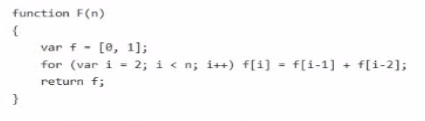
You need the model to create an explanation of the code. The solution must minimize costs. What should you do?
Answer : C
Add the natural-language comment // what does function F do? after the code. The comment gives GPT-35 Turbo a direct and unambiguous instruction to analyze and explain function F. Because it uses syntax that naturally belongs beside source code, the model can distinguish the program being analyzed from the requested task and generate an explanatory completion. Microsoft's prompt-engineering guidance recommends clearly stating the required outcome and using cues that direct the model toward the desired response.
This approach retains the existing GPT-35 Turbo deployment and adds only a small number of prompt tokens, satisfying the cost-minimization requirement. Changing to GPT-4-32k would be unnecessary because the requirement is a straightforward code-explanation task and does not indicate that a substantially larger context window is required.
Adding function F(explanation) resembles a new function declaration or invocation rather than an instruction to explain existing code. The model could interpret it as source code that must be completed. Setting temperature to 1 changes output randomness but does not tell the model to explain the function; it can also make the answer less consistent.
Study Guide alignment: Use prompt-engineering techniques, construct clear model instructions, tune generation behavior, and select an appropriate model based on quality and cost requirements.
====================
 All Official Question Types